Member states of the Abu Dhabi Dialogue (ADD) have outlined workstreams and priorities for the upcoming ninth edition of the Dialogue (2026-2027), where focus will be on leveraging Artificial Intelligence (AI) and digitalisation to develop workers’ skills and ensure smarter governance of labour mobility in the Asia-GCC corridor from labour-sending to receiving countries.
Plans additionally include setting up smart inspection systems to enhance compliance with labour legislation, and using workers’ remittances as a strategic tool for driving development and reshaping their skills.
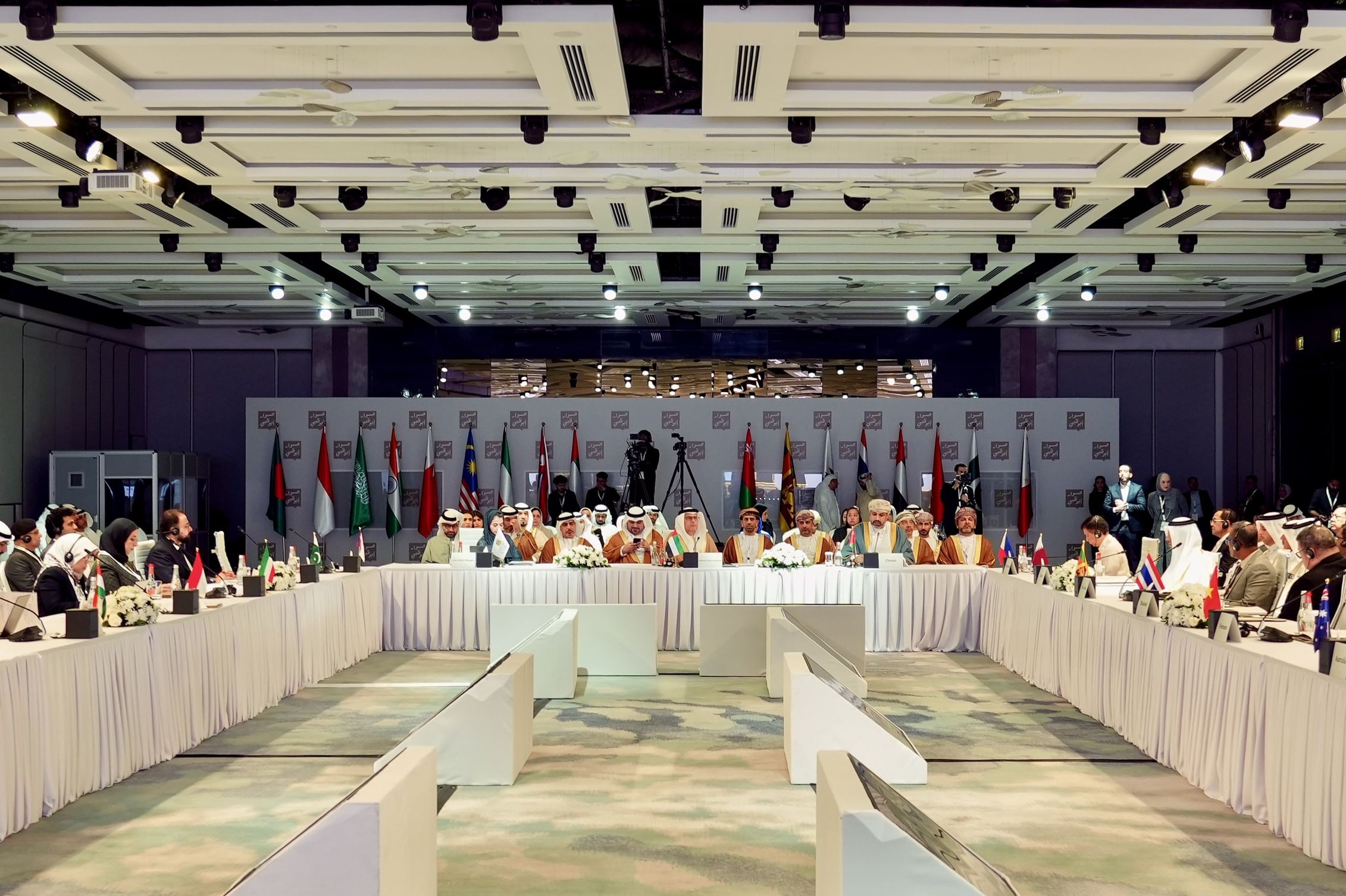
The announcement was made at the conclusion of the eighth ADD Ministerial Consultation, which was held yesterday, Sunday, following two days of meetings hosted by the UAE in its capacity as the Permanent Secretariat of the Dialogue. The event brought together Ministers of Labour, Human Resources, and Employment, along with heads of delegations from member countries. Representatives from international organisations, the Organisation of Islamic Cooperation (OIC) Labour Centre, the private sector, and civil society were also present, in addition to experts, researchers, and specialists.
At the conclusion of the meetings, the Sultanate of Oman passed the Chairmanship of the ADD’s upcoming ninth cycle (2026-2027) over to the Republic of the Philippines. Member states praised the Sultanate for its efforts and expressed confidence in the new Chairmanship of the Philippines, looking forward to a period of constructive engagement and shared progress, in light of the Dialogue’s sustainability, the regional and international standing it has come to enjoy, and the concrete achievements it continues to make – most notably in terms of managing labour mobility from various Asian nations to GCC countries, and enhancing development benefits for the economies of both labour-sending and receiving countries.
In his speech at the final meeting, Dr. Abdulrahman Al Awar, Minister of Human Resources and Emiratisation, Acting Minister of Higher Education and Scientific Research, thanked the participating Ministers and heads of delegations from member states, as well as all observers, for their presence, active contribution, and engagement with the ADD programme.
His Excellency also expressed deep appreciation to the Government of the Sultanate of Oman for its efforts in leading the eighth edition and the remarkable accomplishments it has achieved, which further strengthen the Dialogue process.
He then wished the Republic of the Philippines success as it assumes the Chairmanship for the upcoming period, and with it, the task of ensuring continued momentum and enhancing frameworks of cooperation among member states.
Al Awar applauded the positive spirit and close cooperation seen throughout this year’s edition of the Dialogue, noting that the recommendations issued at its conclusion chart a roadmap for the period ahead for the Abu Dhabi Dialogue process.
He reaffirmed the UAE’s commitment to supporting the Dialogue by continuing to host the ADD Permanent Secretariat, driven by a deep conviction in the active role the Dialogue plays in enhancing bilateral and regional cooperation, while strengthening partnerships that aim to develop processes to regulate labour mobility, protect workers’ rights, and enhance their well-being as businesses thrive.
The programme for the eighth ADD Ministerial Consultation included working sessions and in-depth discussions that led to setting priorities and workstreams for the upcoming ninth edition, notably focusing on exploring the potential and applicability of AI and data analytics in developing smarter skills systems, improving skills matching and recognition, and supporting more efficient and forward-looking labour mobility governance across the Abu Dhabi Dialogue corridor.
In their Joint Declaration, participating member states agreed to explore the role of digitalisation in strengthening labour inspection systems and compliance with legislation, through more efficient, risk-based, and coordinated labour market administration across the Abu Dhabi Dialogue corridor.
The Declaration also outlined feasible policies for more effectively leveraging remittances to support skills development, productive investment, and workforce resilience across the corridor, while ensuring migrants’ choices are respected and reinforcing the principle of shared responsibility between countries of origin and destination.
Furthermore, member states agreed to survey recent developments in legislative frameworks governing labour markets and employment policies across the ADD corridor, and examine their interaction with labour mobility patterns, recruitment practices, and workforce allocation. The objective from this is to support greater alignment, enhanced mutual understanding, and effective cooperation between labour-sending and receiving countries.
Priorities also include exploring reform programmes for education, skills, and employment that are supported by multilateral development banks across labour-sending countries, and determining their role in strengthening the alignment between education and the reality of the labour market, and enabling more effective and orderly labour mobility outcomes across the Abu Dhabi Dialogue corridor, in alignment with existing bilateral and regional frameworks.
The Joint Declaration defined a set of guiding principles for the ninth edition of the Abu Dhabi Dialogue that focused on the interconnected relationship between climate change and labour mobility in the Asia-GCC corridor, as well as between labour mobility and skills required to achieve a just transition to a green economy. Additionally, it focused on accommodating and managing workers across ADD member states, emphasising the importance of addressing relevant legal, social, and career implications, in addition to unlocking the role of skills and diversity for labour productivity in member states.
The Joint Declaration iterated the importance of leveraging the Abu Dhabi Dialogue as a regional platform for exchanging knowledge, coordinating efforts, and enabling collective input into the International Migration Review Forum (IMRF) in 2026. It also highlighted the Dialogue’s pivotal contribution to the Budapest Global DIalogue and other international forums, unifying the vision of Asian countries and presenting it in all forums.
Moreover, ADD member states reaffirmed their commitment to cooperation and constructive dialogue, grounded in the principle of shared responsibility between labour-sending and receiving countries as the foundation for achieving mutually beneficial migration outcomes for all parties.
Abu Dhabi Dialogue was established in 2008 as a voluntary consultative mechanism aimed at providing a public forum for dialogue between Asian labour-sending and receiving countries, focusing on best practices that support and enhance bilateral and regional cooperation efforts, in addition to strengthening partnerships aimed at maximising benefits and advantages for workers, employers, and the economies of these countries.
Comments