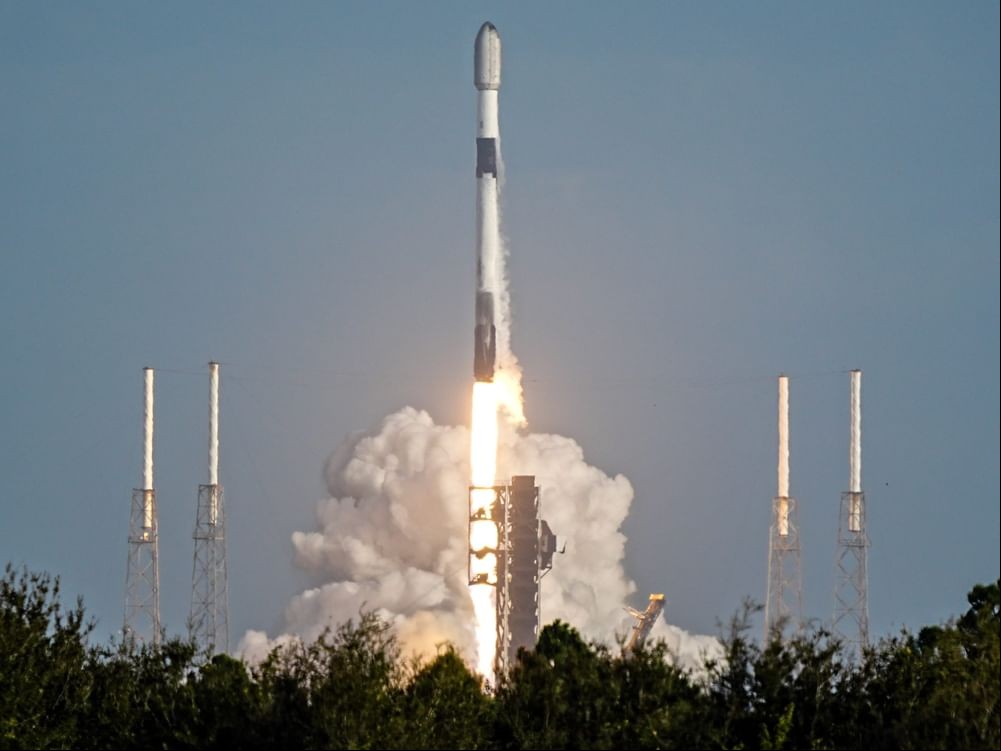
A Falcon 9 rocket carrying about 40 payloads, including NASA's Pandora exoplanet satellite, launched from California's Vandenberg Space Force Base on 11th January.
During its yearlong orbital mission, the 716-pound (325 kilogrammes) Pandora will study at least 20 known exoplanets using a 17-inch-wide (45 centimetres) telescope, which it will train on the worlds as they "transit," or cross the face of, their host stars from the satellite's perspective.
Transits allow astronomers to characterise known exoplanets, especially their atmospheres. Different elements and molecules absorb light at specific wavelengths, so studying the spectrum of starlight that has passed through an atmosphere can reveal a great deal about that atmosphere's composition.
"Pandora aims to disentangle the star and planet spectra by monitoring the brightness of the exoplanet's host star in visible light while simultaneously collecting infrared data," NASA officials wrote in a mission description. "Together, these multiwavelength observations will provide constraints on the star's spot coverage to separate the star's spectrum from the planet's."
Pandora will focus on planets with atmospheres that are dominated by water or hydrogen.


 follow us in google news










Comments