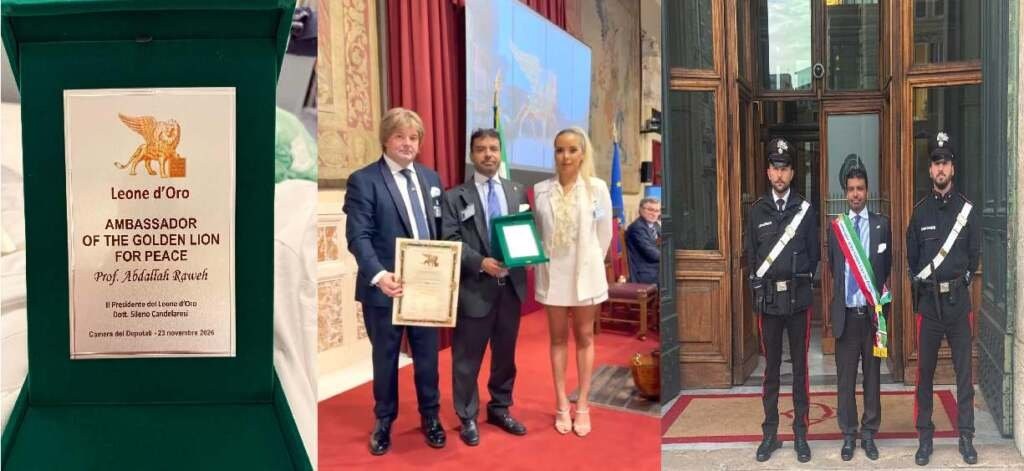
The Italian Parliament in Rome hosted a high-level institutional ceremony during which internationally renowned Emirati cardiac surgeon and academic Professor Abdallah Raweh received a number of prestigious international honours, foremost among them the title of “Ambassador for Peace” from Italy’s Università Armando Curcio. The distinction, the university’s highest honour, was awarded in recognition of his scientific standing, exceptional professional stature, and humanitarian contributions to the field of cardiac surgery.
The honour adds to a distinguished record of achievements by Professor Raweh in Italy, where he also received the “Golden Knight Award – Communication Award” as part of the International Grand Prize of Venice – Golden Lion (Gran Premio Internazionale di Venezia – Leone d’Oro). The award was presented during a ceremony held in the historic Regina Hall at Palazzo Giustiniani, within the Italian Senate, in the presence of prominent parliamentary, medical, cultural and media figures.
Professor Abdallah Raweh represents a distinguished example of an Emirati scientist who has combined highly specialised surgical excellence with academic leadership. He serves as Professor of Cardiac Surgery at the Catholic University of Rome and as Cardiac Surgery Consultant at the renowned Policlinico Gemelli, one of Italy’s most prestigious hospitals and a leading medical destination for the Pope, senior Italian figures and prominent international leaders. He is also Honorary President of the University of Salerno in Italy, Vice President of the University of Lugano in Switzerland, and Professor of Cardiac Surgery in London, United Kingdom.
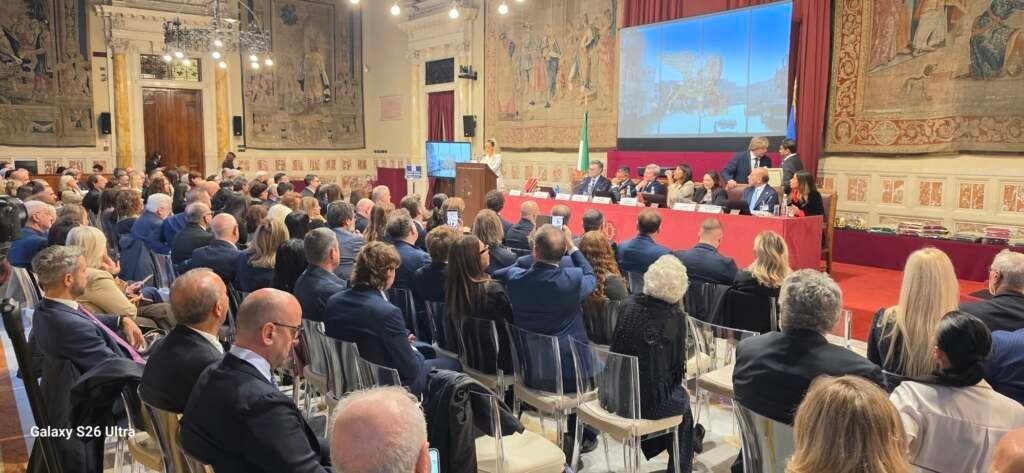
Dr Souad Sbai, former member of the Italian Parliament and journalist, expressed her great happiness and pride at Professor Abdallah Raweh receiving this high-level recognition from Università Armando Curcio under the dome of the Italian Parliament. She stressed that the honour represented not only a personal or Emirati achievement, but also a deserved tribute to Arab communities in Italy and Europe, and clear evidence of the major contributions made by Arab minds and talents to humanity and medical science across the European continent. She added that, despite her own joy at being honoured during the ceremony, her happiness was completed by Professor Raweh receiving what she described as this historic recognition.
In the same context, the Egyptian community in Rome praised the major international honour. Engineer Adel Amer, President of the Egyptian Community in Rome, expressed his profound happiness and pride, describing the recognition as an honour and a badge of distinction for every Arab proud of the Arab world, and a true reflection of the standing of creative Arab talent abroad.
Amer added that this excellence clearly reflects the extensive care and unlimited support provided by the United Arab Emirates to its dedicated citizens across the fields of science and knowledge. He stressed that Emirati scientists have demonstrated to the world that their country continues to produce exceptional scientific talents capable of leadership and of making a positive impact at the highest international academic and medical forums.
The honours were awarded to Professor Raweh in recognition of his unique ability to combine medical and scientific excellence with the delivery of a global humanitarian message based on knowledge, solidarity and hope, placing human life and dignity at the heart of his professional mission. The awarding bodies noted that his humanitarian initiatives to treat children and cardiac patients in the most disadvantaged communities, alongside his role in training new generations of physicians, have embodied the concept of medicine as a bridge for civilisational and human communication between peoples.
Speaking after receiving the honour, Professor Abdallah Raweh expressed his deep pride in the recognition, saying:
“Medical knowledge does not realise its full value if it remains confined to operating rooms, laboratories or universities. It becomes more valuable when we are able to transfer it to others and transform it into awareness, hope and a new opportunity for life.”
He added that cardiac surgery had taught him that every decision carries a profound human responsibility and that science knows no borders. At the same time, he stressed that the accelerating revolution in medicine and artificial intelligence places an even greater responsibility on physicians to engage in responsible scientific communication, combat misinformation, and bring the latest scientific advances closer to patients and communities.
Professor Raweh concluded by dedicating the honour to every physician, researcher and nurse who places the human being at the forefront of their priorities, and to every patient who has placed their trust in him. He stressed that the greatest reward remains seeing a person regain their life, and he also dedicated this historic recognition to the United Arab Emirates and its leadership, which has spared no effort in supporting its scientists in every possible way.


 follow us in google news




Comments