When we reach our eighth decade, the memories of life begin to awaken and return—memories from the journey of life that have long been veiled by forgetfulness despite their importance and weight in shaping one’s character. Praise be to God, I have lived a life full of events and have experienced moments and encounters of remarkable richness. I record here glimpses of them, connected to the late President Gamal Abdel Nasser.
The first time I met him was in 1956, during the Suez Crisis—the tripartite aggression by Britain, France, and Israel against the cities of the Suez Canal, along with the economic blockade imposed on Egypt. I was fourteen years old at the time. I woke up in the middle of the night to use the bathroom and noticed that the lights at the entrance of our apartment in Garden City Cairo were on. Wearing my pajamas and barefoot, I went to investigate. I entered the main hall and found a large man in a suit and tie standing motionless inside the apartment door, while the salon lights were on. I stepped inside to find my late father, dressed in his nightwear and robe, seated across from President Gamal Abdel Nasser, who had removed his jacket. Between them lay numerous files and papers, and they were engaged in a serious discussion. The President looked at me and asked, “What woke you up?” My natural reply was, “I want to go to the bathroom.” He smiled and said, “Come greet me first, then go.” I did so and returned to my bed.
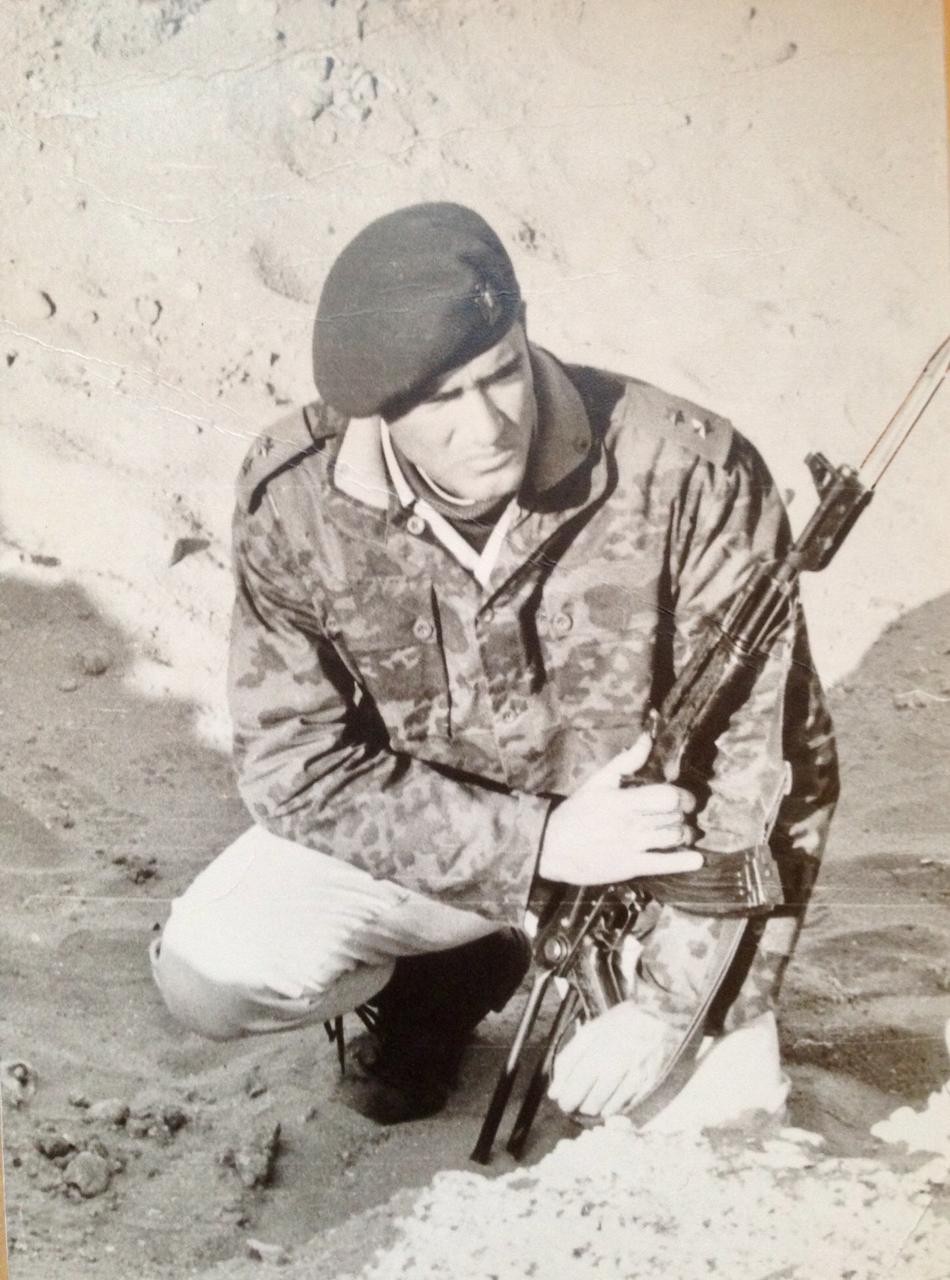
I later learned that the visit had been unexpected, and that its purpose was to explore my late father’s ideas on confronting the economic blockade. At the time, my father held the position of Minister of Finance. Two weeks prior to that visit, President Gamal Abdel Nasser had issued an order for ministers to undergo military training and be equipped with modern rifles in anticipation of possible escalation. Despite my young age, I was allowed to participate fully in the training, which took place practically on the grounds near the Al Ahly SC club. Live ammunition training was conducted in Giza, marking my first experience with military life.
Due to my father’s success in breaking the economic blockade—and even outmaneuvering the British in negotiations, achieving gains for Egypt—President Gamal Abdel Nasser issued a decision exempting Dr. Al-Qaisouni’s children from the requirement of Egyptian lineage (father, mother, grandparents) for admission to the Military Academy. My mother was British, and I was born in Britain during the turmoil of the Second World War.
Years passed, and I applied to the Military Academy. I was presented to the late General Mohamed Fawzi, Director of the Military Academy in 1963, who approved my admission based on the President’s exemption. My life and character were thus shaped to align with the military profession. General Fawzi was known for his strictness and discipline, which he applied to me even more rigorously, so that I would serve as an example and to ensure no preferential treatment due to my father’s position—who was then Deputy Prime Minister.
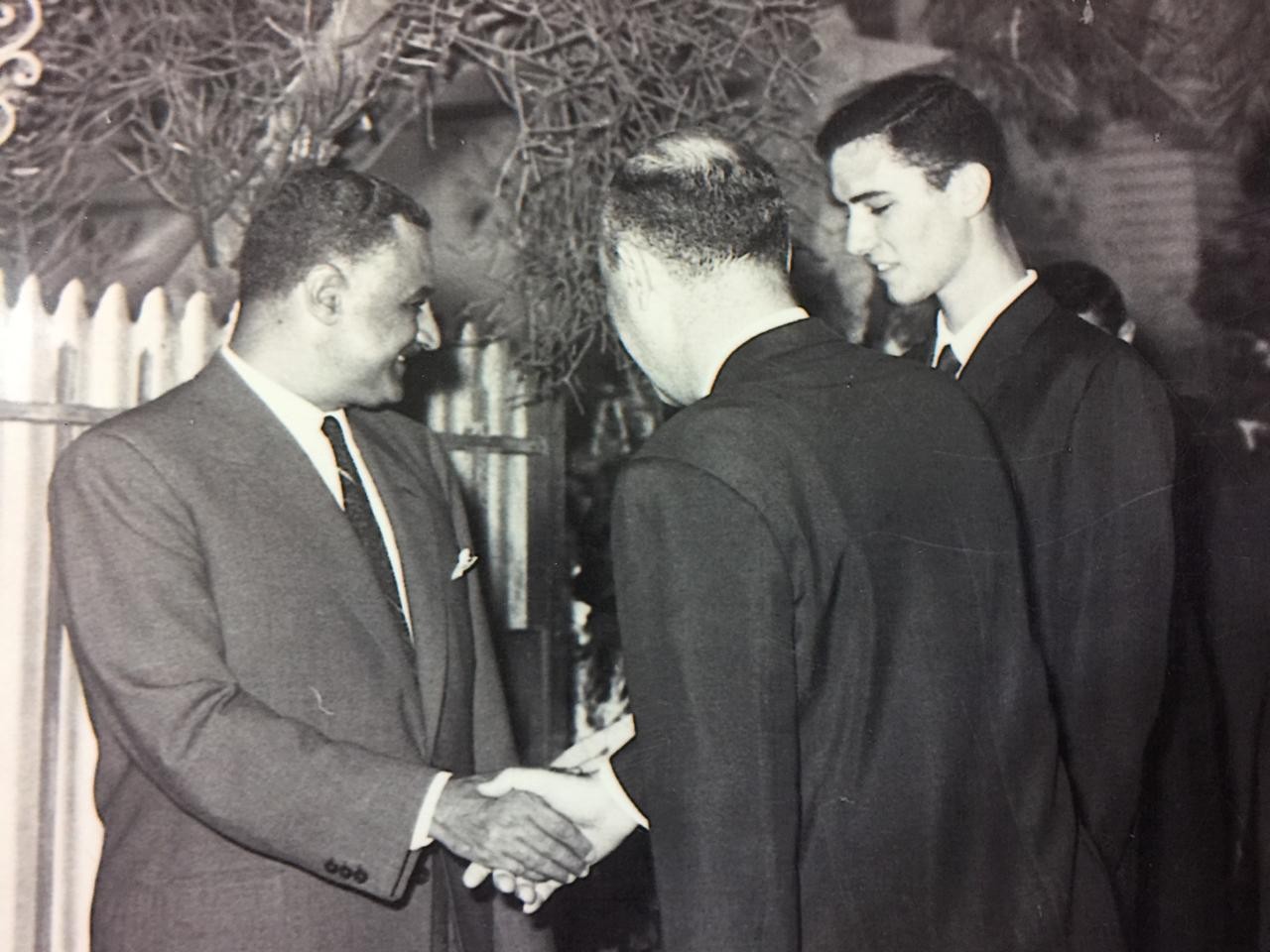
During my time at the Academy, my father requested that the President attend my sister Nadia’s wedding. The President agreed on the condition that I attend the ceremony in military uniform. This indeed took place, and I received him alongside my father. He was accompanied by the late Field Marshal Abdel Hakim Amer, Minister of War. It was evident from the photographs taken at the time how pleased he was with my joining the army.
During the wedding ceremony (in July), the first humorous incident between me and the President occurred. The heat was intense, and I was sweating heavily. The President asked me to remove my cap. This was heard by Field Marshal Amer, who was seated beside him. I politely refused. Surprised, the Field Marshal laughed and said, “The Supreme Commander of the Armed Forces has ordered you to remove your cap—carry it out, cadet.” For the second time, I refused. The President looked at me and asked, “Why do you refuse?” I leaned closer and said softly—loud enough for the Field Marshal to hear—“Because General Mohamed Fawzi, the Director of the Academy, is seated across from you.” Both the President and the Field Marshal burst into laughter, and he quickly said, “You’re right—keep your cap on.”
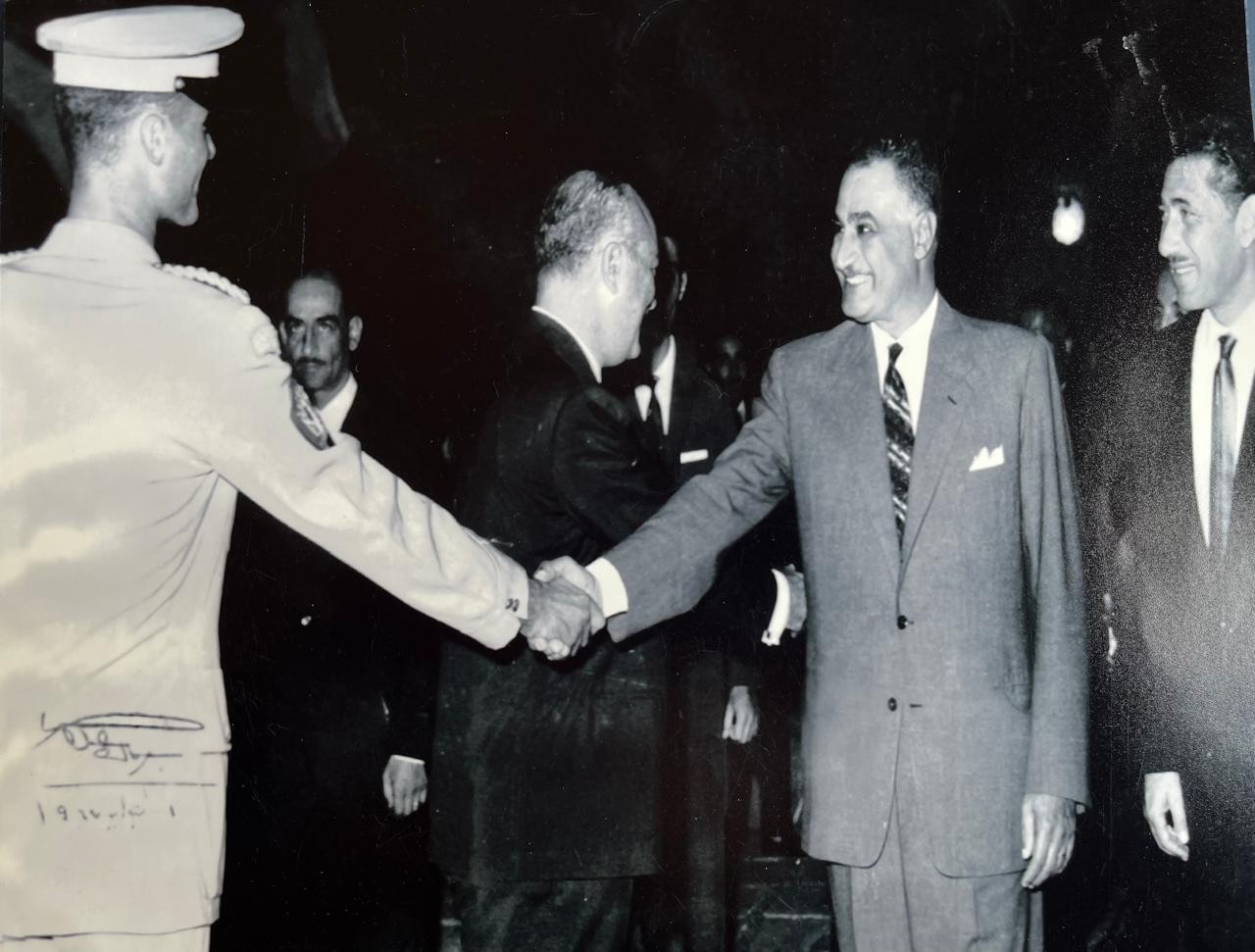
In 1964, preparations began for the Military Academy cadets’ participation in the July 23 military parade. This included training the honor guard, which would stand opposite the President’s platform in Nasr City one hour before his arrival and remain in position throughout the parade until his departure—a period exceeding six hours. During this time, the honor guard cadets stood completely motionless with their weapons. The tallest cadets were selected for this role, and I was the tallest at the time, earning the position of right guide of the honor guard formation.
Training began during cadets’ rest periods under military medical supervision about three months before the parade. Every few days, the duration of standing at attention under the sun increased until we reached a full seven hours. On the appointed day, we were transported from the Academy to the parade site in full ceremonial uniform and arms. We took our positions, the President arrived, and the flag salute was conducted. The parade began, and my father was seated behind the President, naturally observing the duty I had been assigned.
I stood completely still, drenched in sweat from the heat, my eyes fixed on my father, who was fully aware of this. He began sipping the cold drinks served to him, deliberately raising them so I could see—teasing and provoking me. After the parade ended and the President departed, my father crossed the street and requested permission from the honor guard commander to meet me. I was ordered to step forward and leave the formation. I recall that after standing motionless for nearly six hours, taking that step was extremely painful, but I had been well trained.
I developed a strong friendship with the President’s son, the late Dr. Khaled Gamal Abdel Nasser, during our school years at Heliopolis National School. This allowed me to visit the President’s home at least once a week for dinner with Khaled and to watch a film. After graduating and joining the paratrooper forces as an officer, I continued these visits.
The second humorous incident with the President occurred one night in 1966. Khaled invited me to dinner and a film. Due to limited time, I went in my military uniform. After removing my cap, I sat in the front row of the small screening hall, with a small table in front of me holding dinner, while Khaled and two friends sat in the back row. The lights were turned off and the film began. I became so absorbed in it that I did not notice someone entering through a side door in the darkness. The person stood in front of me, blocking the screen, and quietly asked, “Where is Khaled?” Annoyed, I extended my hand toward his leg and asked him to step aside and repeat the question. At that moment, the hall supervisor noticed the person standing before me, stopped the film, and turned on the lights—only for me to realize that my hand was pushing none other than President Gamal Abdel Nasser, the Supreme Commander of the Armed Forces, while I was a newly graduated lieutenant.
I was struck with shock, confusion, and fear. I jumped to attention and performed a military salute—without my cap—my entire body trembling, my hand shaking violently. I kept repeating loudly, “Yes, sir!” which caused Khaled and his friends to burst into laughter. The President, meanwhile, patted my face and shoulder, saying, “How are you, Mahmoud? How is your father?” As for me, I kept repeating, “Yes, sir!” even after he moved to greet Khaled and then left the hall. Following this incident, I left the hall and returned home, suffering from severe nervous distress for several days.
I was well trained, which enabled me to participate in the Yemen War, then the battles of June 1967 and what followed. I left military service in mid-1977. Despite forty years of civilian life since then, the discipline instilled by Field Marshal Mohamed Fawzi still governs my character to this day. May God have mercy on them all.
Former Advisor to the Minister of Tourism and the Minister of Environment for Ecotourism Affairs







 follow us in google news





Comments