On 14 July 1967, my platoon of the Sa’ka (Egyptian Commando Forces) was positioned west of the Suez Canal, approximately one and a half kilometers behind El Ferdan Bridge. Throughout the previous night and the entire day, we had been deepening our trenches in anticipation of an enemy attack. A tank was positioned several meters behind my location, while a minefield lay directly in front of us.
At 12:00 noon on 15 July 1967, we heard the sound of enemy fighter aircraft approaching from the east over the Suez Canal, heading directly toward our position. Every soldier immediately jumped into his trench and cocked his weapon, preparing for instant engagement.
As for me, I sat on the edge of the central trench among my men and raised my binoculars toward the approaching aircraft. I immediately identified their types—Ouragan, Super Mystère, and Mystère fighters. I watched them release their bombs and fire rockets at a position south of the bridge, then another behind it, followed by a third position to the north.
Each time, I saw towering columns of flames and dense black smoke rise nearly half a kilometer into the sky, while electricity poles lining the paved roads were hurled to similar heights together with shattered buildings and military equipment.
While I was completely focused on observing the attack, I suddenly heard a soldier in a neighboring trench shout:
“Lieutenant El-Kaissouni! Get into the trench immediately! The enemy aircraft are attacking us from behind!”
I instantly jumped into the trench, lay flat on its floor alongside my soldiers, and covered my head with my arms.
Seconds later, a deafening roar thundered directly above us, followed by a series of tremendous explosions extremely close to our trench. Around seven enemy aircraft swept over our position. The explosions continued relentlessly as the trench walls cracked and collapsed around me. Sand poured heavily over my head and back, while thick black smoke rapidly spread across the battlefield until it completely blocked out the sunlight.
Our company commander immediately ordered everyone to crawl southward through the trenches toward a nearby irrigation canal. He had noticed thick smoke rising from the tank behind us and feared it might explode.
The soldiers of my platoon crawled swiftly out of the trenches and submerged themselves in the canal until only their heads remained above the water, fully prepared to engage should a ground assault follow.
I remained inside the position until I had confirmed that every one of my men had safely left the trench. I then began moving toward the canal myself.
Suddenly I heard someone groaning and calling out:
“Lieutenant El-Kaissouni… help me!”
I turned back immediately and crawled toward the voice. I found Private Abdel Salam buried beneath collapsed sand up to his neck after the sides of the trench had caved in under the force of nearby bomb explosions.
Without hesitation, I began digging away the sand with my bare hands. Sergeant First Class Abdel Khaleq, noticing that I had not yet emerged from the trench, rushed over to assist me. Together we managed to pull Abdel Salam free before the trench collapsed again.
The smoke coming from the tank was becoming suffocating.
We remained in the canal for several minutes. During that time I noticed flames spreading toward our ammunition trench. Meanwhile, the enemy aircraft had already crossed back over the canal toward the east.
I immediately climbed out of the canal and ordered three of my soldiers to accompany me in preventing the fire from reaching the ammunition dump, which could have resulted in a catastrophic explosion.
By throwing large quantities of sand onto the advancing flames, we succeeded in bringing the fire under control. We then discovered that the smoke had actually originated from fragments that had struck the smoke generator mounted behind the tank, while the tank itself had remained intact.
Praise be to God.
About half an hour later, I carried out a roll call of the platoon.
The results were heartbreaking.
Two soldiers had been seriously wounded and required immediate evacuation to the field hospital.
One soldier had been buried beneath the collapsed trench.
Two more had been killed instantly by the bombs, their pure remains scattered around our position.
I then received orders to withdraw my platoon to Battalion Headquarters, as our assigned mission had been completed.
When we arrived, we were received with overwhelming relief and warmth.
Everyone had believed that both I and my entire platoon had been killed. Through binoculars they had witnessed the concentrated air attack on our position, the continuous explosions, and the thick black smoke that had completely engulfed our location.
At 6:30 p.m., an intense wave of enemy air raids began that lasted for nearly two and a half hours. More than twenty enemy aircraft attacked positions south of us around Ismailia and others to the north near Qantara. From where we stood, we watched enormous columns of dense black smoke rising high into the sky above those positions.
Then, everyone noticed a single A-4 Skyhawk banking west of our location. It was obvious that the aircraft intended to fly directly over our position at very low altitude.
Our battalion commander immediately shouted his orders.
We were all instructed to cock our AK-47 rifles, raise them toward the sky, and fire every round we had. More than one hundred automatic rifles unleashed their fire simultaneously, creating what was known as a “stationary curtain of fire”—a solid wall of bullets through which the aircraft would have to pass.
The tactic succeeded.
We hit the aircraft.
Dense smoke immediately poured from its rear, accompanied by a deafening roar. The aircraft began to lose altitude, banking downward before crashing and exploding on the eastern side of the Suez Canal.
Just moments before impact, the pilot succeeded in ejecting. We watched him descend beneath his parachute, prompting everyone around us to erupt in cheers and expressions of joy.
Soon afterwards, we received news that dramatically lifted our spirits.
The Egyptian Air Force, flying MiG and Sukhoi aircraft, had launched an immediate and massive retaliatory strike against enemy positions opposite Suez, Ismailia, Qantara, Kabrit, and Port Fouad.
My fellow officers later told me that the sight of our aircraft diving onto enemy positions east of Qantara with extraordinary determination and a clear spirit of retaliation was unforgettable. They watched Israeli soldiers fleeing toward El Arish, some in military vehicles and others literally running on foot.
During that offensive, six enemy aircraft were reportedly shot down, while an armored battalion, a missile battalion, an artillery battalion, and several other military vehicles were destroyed.
Foreign radio broadcasts subsequently reported that Israel had appealed to the United Nations to call upon Egypt to agree to a ceasefire.
We must never forget.
Praise be to God.
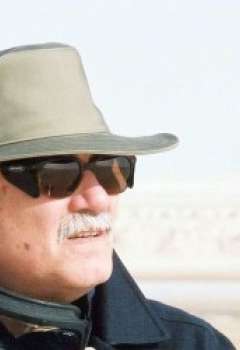
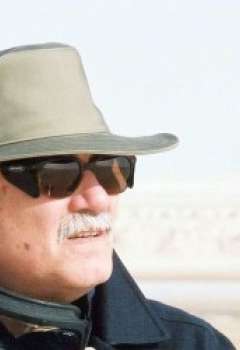
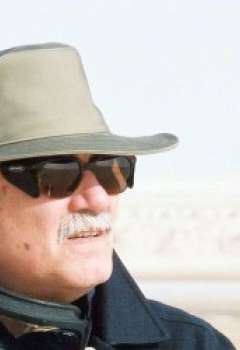
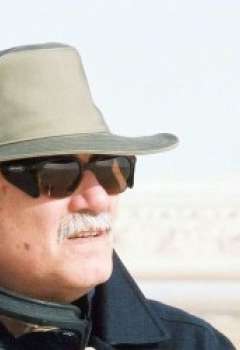
First Lieutenant (Sa’ka Commandos)
Mahmoud Abdel Moneim El-Kaissouni
Evening of 16 July 1967







 follow us in google news






Comments